Engineering the Intelligent Reading Specialist

The Science Inside LUCALabs

LUCA is what you get when the Science of Reading is operationalized at scale. Phoneme-level listening, dependency inference for skill diagnosis, and patented decodable story generation, all in one continuous loop.

Trusted by schools and backed by leading research institutions

National Science Foundation SBIRCarnegie Mellon UniversityUnited States Patent and Trademark OfficeESSA Tier IV Building Evidence Badge by Leanlab EducationNewSchools Venture FundProvident Charter SchoolCodesign Product Certification by Leanlab EducationNew Kensington-Arnold School DistrictSXSW EDUNational Science Foundation SBIRCarnegie Mellon UniversityUnited States Patent and Trademark OfficeESSA Tier IV Building Evidence Badge by Leanlab EducationNewSchools Venture FundProvident Charter SchoolCodesign Product Certification by Leanlab EducationNew Kensington-Arnold School DistrictSXSW EDU
LUCALabs

The Intelligence Behind Every Reading Session

Most programs treat every reader the same. LUCA listens to every sound your child makes, finds the exact gaps, and builds a reading journey as unique as your child.

Microphone representing LUCA's listening capability

Listens

Sound-by-sound speech recognition

LUCA captures every sound as students read aloud, identifying exactly where difficulty occurs. Not just right or wrong, but precisely which sounds need attention.

Brain with neuropathways representing LUCA's analysis capability

Analyzes

Pinpoints specific skill gaps

Patterns across 763,000+ sound-to-spelling connections reveal each reader's unique strengths and gaps. No separate testing required.

Target with arrow representing LUCA's personalized intervention

Builds

Personalized reading intervention

Personalized stories and targeted lessons adapt in real time to each student's needs and interests. No two readers experience the same content.

Phase 1: Listen

Phoneme-Level Speech Recognition

General-purpose speech recognition is built to convert spoken language into text. Reading assessment needs the opposite: it needs to know not just what the student said but exactly which sounds they produced correctly within each word. LUCA's SoundScout was trained specifically for that task.

Most programs

Word-Level Recognition

The system flags whether the word came out right or wrong. A child who reads "ship" as "sip" gets the same feedback as one who reads it as "fish": both scored as a miscue, with no diagnostic information about which sound was missing.

The program knows the student struggled with the word but cannot say why.

LUCA SoundScout

Phoneme-Level Recognition

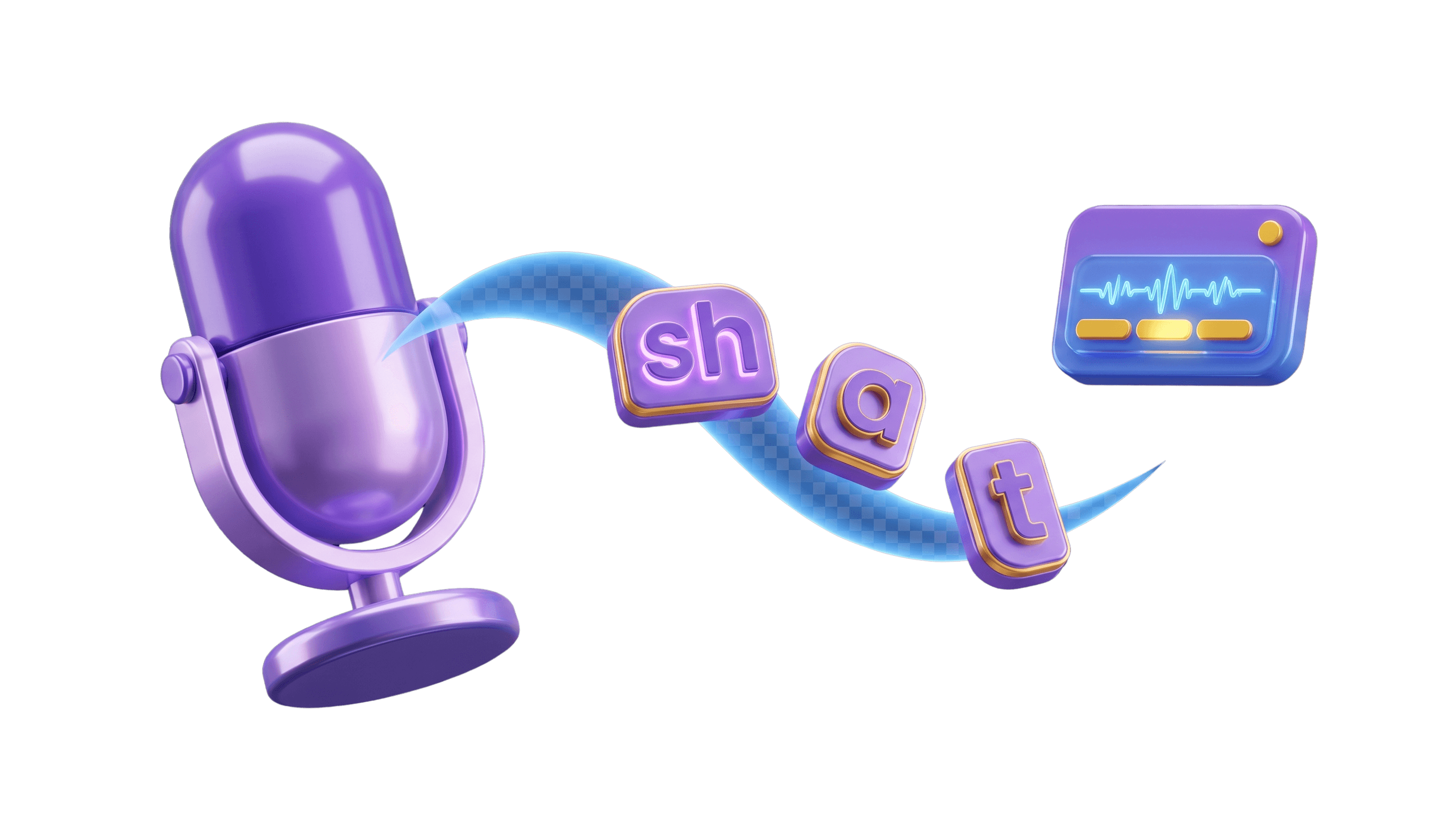
The audio is segmented into individual phonemes. The /sh/, /i/, and /p/ in "ship" are each scored separately. LUCA can see that the student dropped the /sh/ and substituted a stop consonant.

LUCA knows which specific sound the student needs targeted practice on.

The diagnostic value of phoneme-level resolution

At the phoneme level, every word a student reads is a multi-dimensional data point. A 100-word passage produces several hundred phoneme-level observations, each tagged to specific grapheme-phoneme correspondences in LUCA's database. That is the resolution required to identify and remediate sound-level gaps that word-level programs cannot see.

SoundScout runs through standard device microphones (Chromebook, tablet, laptop). No special hardware required.

Phase 2: Analyze

From Every Word, A Diagnosis

Reading skills build on each other. A student who reads complex words successfully has shown mastery of the simpler patterns underneath. LUCA tracks the full skill picture from observed performance, so educators see what each student knows, what is emerging, and what comes next, without separate testing.

Comprehensive Scope

Full phonics progression covered

From short vowels through multi-syllable decoding, LUCA covers the skills students need to read fluently. The system knows where each student is and where they need to go next.

Knowledge Base

763,000+ grapheme-phoneme mappings

The largest validated phonics knowledge base in any reading product. It powers every assessment LUCA performs and every story LUCA generates, in real time.

Real-Time Insight

Updated after every reading session

Educators and families see jargon-free progress in EducatorHub and FamilyHub the moment a student finishes reading. No waiting weeks for benchmark reports.

No Testing Window

Assessment is instruction

Most programs pause learning to test. With LUCA, every word read provides instructional value and progress signal at the same time. Maximum reading time, zero testing time.

Phase 3: Build

Patented Decodable Story Generation

Once LUCA knows which phonics patterns a student needs, the next problem is content. Static curricula cannot serve every student at every skill level on every session.

StoryGen generates fully decodable stories on demand from validated vocabulary pools. LUCADictionary provides student-facing definitions for every word that appears, ensuring vocabulary growth happens within decodable contexts. JourneyBuilder selects the next skill target. Pathfinder routes through the optimal sequence.

United States Patent and Trademark Office

Protected Innovation

U.S. Patent No. 12,394,332 B2

Read the patent on Google Patents →

S&S Alignment

Scope and sequence-aligned vocabulary across the full phonics progression, from short vowels through morphology.

High-Frequency Words

The most common words in English text, anchored for orthographic mapping (Heart Words) so they become instant-recall sight reads.

State Alignment

Aligned to state reading standards and the benchmarking frameworks districts already use, so progress maps cleanly to existing accountability systems.

What this means for a student

A student working on r-controlled vowels gets a story tonight that uses ar, er, ir, or, and ur within a narrative they have not seen before, calibrated to their current decodability threshold and personalized with characters and themes that interest them. Tomorrow's story will be different, will reflect what they learned tonight, and will press into the next skill on their journey.

JourneyBuilder selects the next skill target based on Assessment Intelligence's diagnosis. Pathfinder routes the student through the optimal sequence. StoryGen fills in the narrative. LUCADictionary unlocks any word the student does not yet know. The result is reading practice that is genuinely individualized, not selected from a fixed library.

Reading Surface

Typography for Struggling Readers

The font and the typographic settings around the font matter for K-12 readers, especially those with dyslexia. LUCA's reading surface is designed to current dyslexia-research best practices, not to outdated assumptions about what helps.

Lexend's evidence-aligned design

  • checkmark
    Sans-serif letterforms reduce cognitive noise during decoding
  • checkmark
    Generous inter-letter spacing reduces visual crowding
  • checkmark
    High x-height aids legibility at body-text sizes
  • checkmark
    Low stroke contrast supports word recognition at small sizes
  • checkmark
    Variable width family (Deca, Mega, Giga) for grade-banded defaults

Typographic settings (BDA 2023)

  • checkmark
    1.5x line height minimum across reading surfaces
  • checkmark
    Increased letter tracking (Zorzi et al., 2012, PNAS)
  • checkmark
    Off-white background, dark gray text (reduces visual stress)
  • checkmark
    Left-aligned text, never justified
  • checkmark
    Bold for emphasis (no italics, underlining, all-caps)
The evidence base

Why these settings, why this typeface

LUCA defaults to Lexend Deca because its design principles are individually supported in the legibility literature. Sans-serif letterforms, high x-height, low stroke contrast, and generous spacing each have independent research support.

Two findings from peer-reviewed reading research drive Lexend's relevance for struggling readers specifically: extra-large letter spacing improves reading in dyslexia (Zorzi et al., 2012, PNAS), and font personalization improves K-12 reading comprehension by more than 20 percent over a worst-fit font (Sheppard et al., 2023, Education Sciences). Lexend's variable family lets LUCA select grade-banded defaults that match the spacing each developmental stage benefits from most.

The typographic settings around the font, line height, letter tracking, color contrast, and alignment, follow the British Dyslexia Association (2023) Style Guide. These settings have stronger and more replicated evidence than any specific typeface choice, and LUCA implements them on every reading surface in the product.

Validation

Why this is real and not just a claim

Reading interventions do not get NSF SBIR funding without demonstrating both scientific merit and technical feasibility. The acceptance rate is approximately 3 percent. LUCA cleared that bar.

Carnegie Mellon University, one of the global leaders in language technology and learning science, partnered with LUCA on the underlying methodology. The U.S. Patent and Trademark Office granted Patent No. 12,394,332 B2 for the adaptive decodable story generation system after an examined application.

The Spring 2026 pilot is the operational proof: students gained +17.4 WPM in fluency and +22.8 percentage points in focus-word accuracy across a 14-week intervention period.

See Pilot Methodology and Results →

Validation Stack

  • checkmark
    U.S. Patent No. 12,394,332 B2
  • checkmark
    NSF SBIR Grant Recipient (3 percent acceptance rate)
  • checkmark
    Carnegie Mellon University research partnership
  • checkmark
    NewSchools Venture Fund selection
  • checkmark
    Spring 2026 pilot: +17.4 WPM, +22.8 pp accuracy
  • checkmark
    763,000+ grapheme-phoneme mappings
Research and Standards

The full research foundation

LUCA's instructional design is grounded in decades of converging evidence: orthographic mapping (Ehri), self-teaching hypothesis (Share), the Simple View of Reading (Gough and Tunmer), tier 2 intervention meta-analyses (Wanzek), the British Dyslexia Association Style Guide, font personalization research (Sheppard et al.), and dyslexia letter-spacing studies (Zorzi et al., PNAS). The complete bibliography lives on the research page.

FAQ

Technical Questions

Frequently Asked Questions

LUCA's SoundScout uses speech recognition trained specifically for reading assessment. Unlike general speech-to-text, which scores success at the word level, SoundScout segments the audio waveform into individual phonemes and scores each one against expected production. That sub-word resolution is what lets LUCA identify which specific sounds a student has and has not mastered.

Every English word can be broken down into its grapheme-phoneme correspondences (which letters represent which sounds). LUCA maintains over 763,000 of these mappings, which powers SoundScout's evaluation and StoryGen's content construction.

Reading skills develop hierarchically. A student who masters complex patterns has demonstrated prerequisite skills by implication. LUCA's Assessment Intelligence walks the dependency graph and infers mastery, reducing assessment time substantially for struggling readers.

Yes. U.S. Patent No. 12,394,332 B2 covers the adaptive, decodable story generation system. StoryGen draws from validated vocabulary pools and constructs unique stories targeting each student's current phonics skill targets. LUCADictionary provides student-facing definitions for vocabulary growth within decodable contexts.

LUCA defaults to Lexend Deca because it implements spacing and letterform principles supported by independent peer-reviewed research. Extra-large letter spacing improves reading in dyslexia (Zorzi et al., 2012, PNAS). Font personalization improved K-12 reading comprehension by more than 20 percent over a worst-fit font (Sheppard et al., 2023). LUCA also follows the British Dyslexia Association's 2023 typography recommendations for line spacing, letter tracking, and color contrast.

Yes. SoundScout runs through standard device microphones on Chromebooks, tablets, and laptops. There are no headsets, no proprietary recorders, and no IT setup beyond a web browser.

General AI is built for conversation. LUCA is built for reading instruction. SoundScout is trained on reading-specific audio, not general speech. The dependency graph reflects systematic phonics, not general language. StoryGen is constrained to validated decodable vocabulary, not arbitrary generation. The patent and the research validation reflect that reading-specific architecture.

LUCA is the recipient of an NSF SBIR Grant (3 percent acceptance rate program) and operates a Carnegie Mellon University research partnership. The Spring 2026 pilot showed students gaining +17.4 WPM in fluency and +22.8 percentage points in focus-word accuracy. Methodology is published at luca.ai/our-technology/evidence.

Yes. LUCALabs operationalizes the principles of Structured Literacy: explicit, systematic, diagnostic, and cumulative phonics instruction. The full alignment narrative is at luca.ai/our-technology/science-of-reading-alignment.

Try the science yourself in two minutes

Build a personalized decodable story in the LUCA Playground. No sign-up required to try.

Open the Playground →